Post-harvest processing
Between the picked cherry and the green coffee, processing shapes the final quality. The sources cited here mainly describe the natural, semi-washed and washed methods.
The essentials in three points
- The FAO manual (Laos) aims for green coffee at 12 % moisture for export or roasting. This is that manual's target, not a universal standard [1].
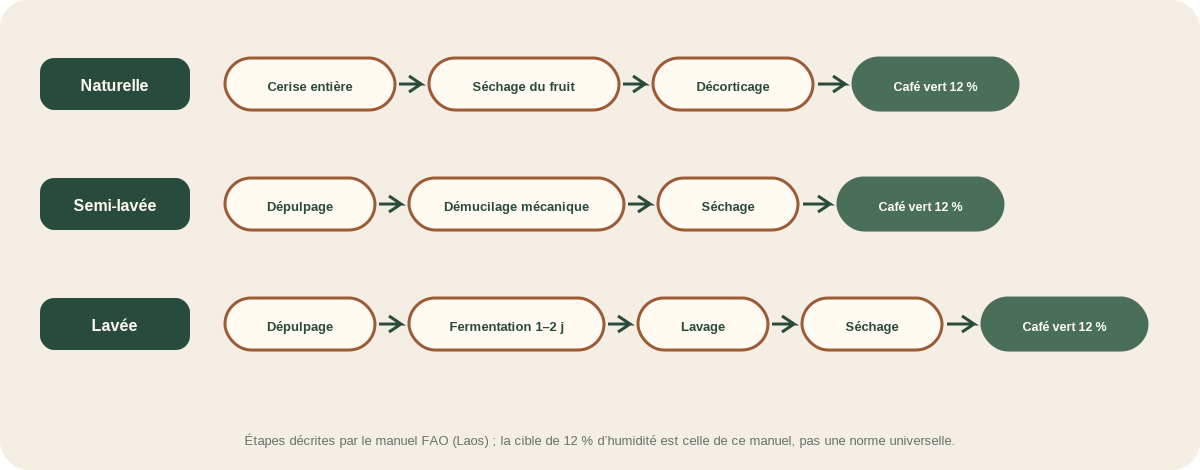
- Three basic methods: natural, semi-washed, washed. They differ in mucilage removal, water use and fermentation risk [1].
- According to this manual, quality lost through over-fermentation, mould, odour or bean damage cannot be recovered [1].
Go deeper
Tap a heading to open or close the section.
From fruit to green coffee
According to the FAO manual for Laos, processing takes the fresh cherry to a clean green bean at 12 % moisture. The cited chain includes harvest, pulping, fermentation, washing, drying, hulling, cleaning, grading, storage and transport; it varies with the method: the natural route skips pulping, the semi-washed route skips fermentation [1].
Washed route
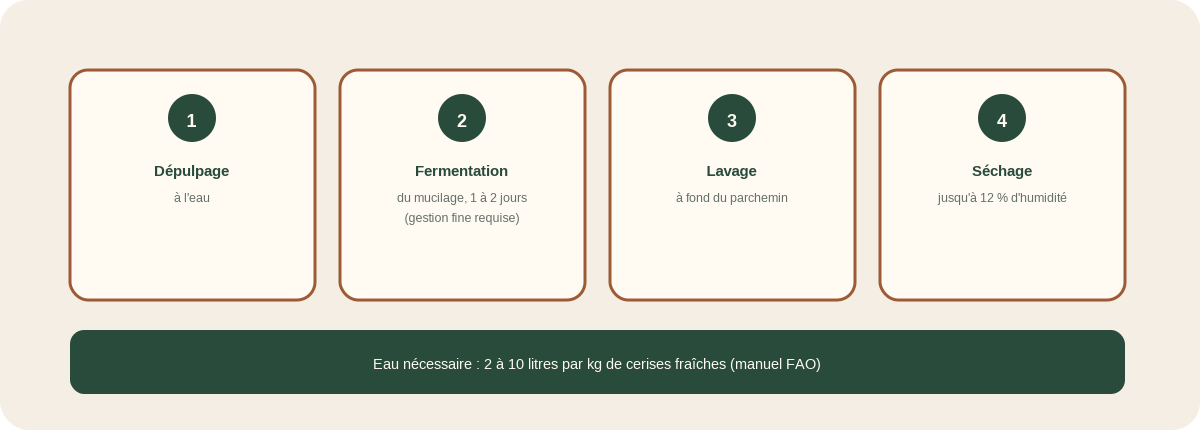
In the FAO manual's description: pulping with water, then the mucilage (sugary layer) ferments for one to two days, then the parchment is washed thoroughly and dried to 12 %. The manual indicates 2 to 10 L of water per kg of fresh cherries and careful management of fermentation [1].
Semi-washed route
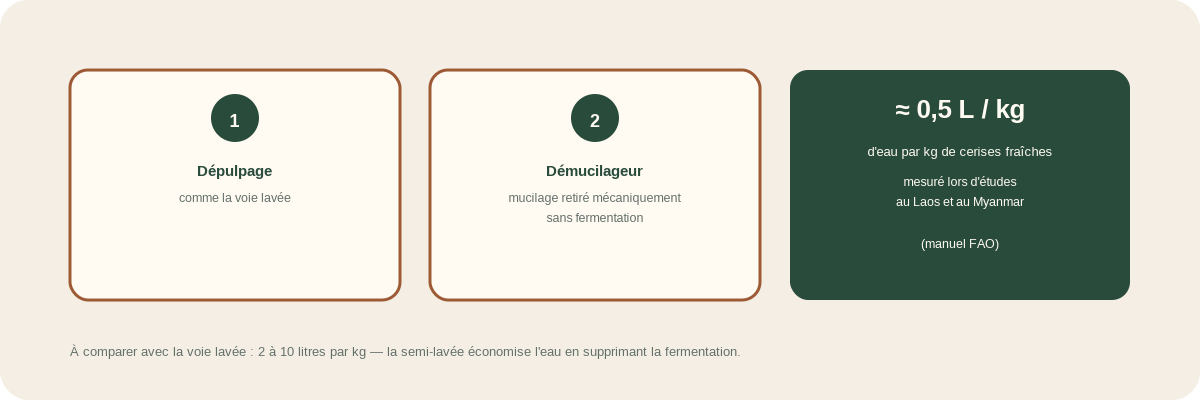
After pulping, the mucilage is removed mechanically by a demucilager, without fermentation. The manual indicates about 0.5 L of water per kg of fresh cherries, measured in studies in Laos and Myanmar [1].
Natural route
A one-step operation: the bean dries inside the whole fruit down to 12 %, then the dried cherry is hulled. The manual judges it cheap but of low quality and not recommended, in the Laos context where it is mostly used for robusta. This is the manual's judgement; other sources describe high-quality natural coffees (to be documented) [1].

Batches and contamination
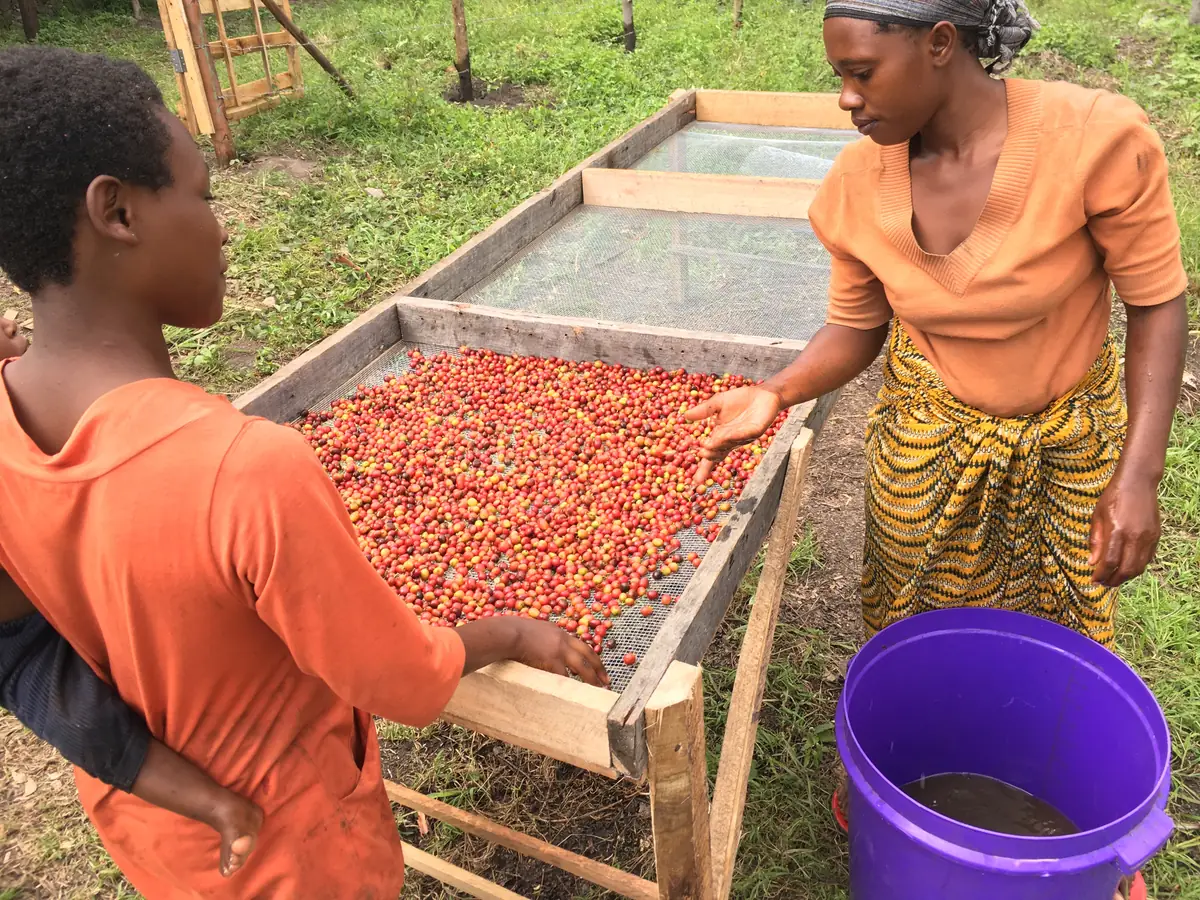
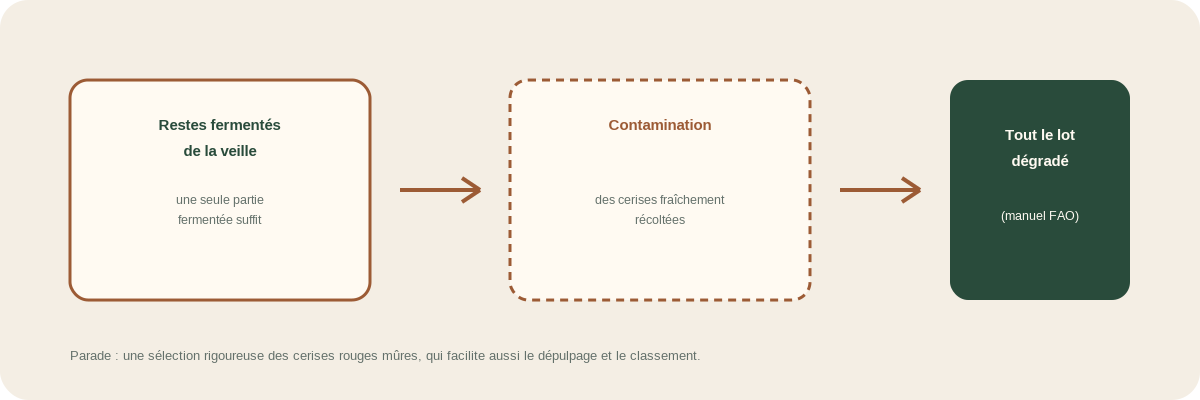
According to the FAO manual, any fermented leftover from the previous day contaminates freshly harvested cherries and degrades the whole batch [1]. Strict selection of ripe red cherries makes pulping and grading easier [1].
Honey process
A "honey" is a coffee that is pulped and then dried with its sticky mucilage; precise definitions vary from one producer to another [2]. In Costa Rica, three degrees are generally distinguished, from yellow to red and then black [3]. These labels are not standardised: ask for the actual process.
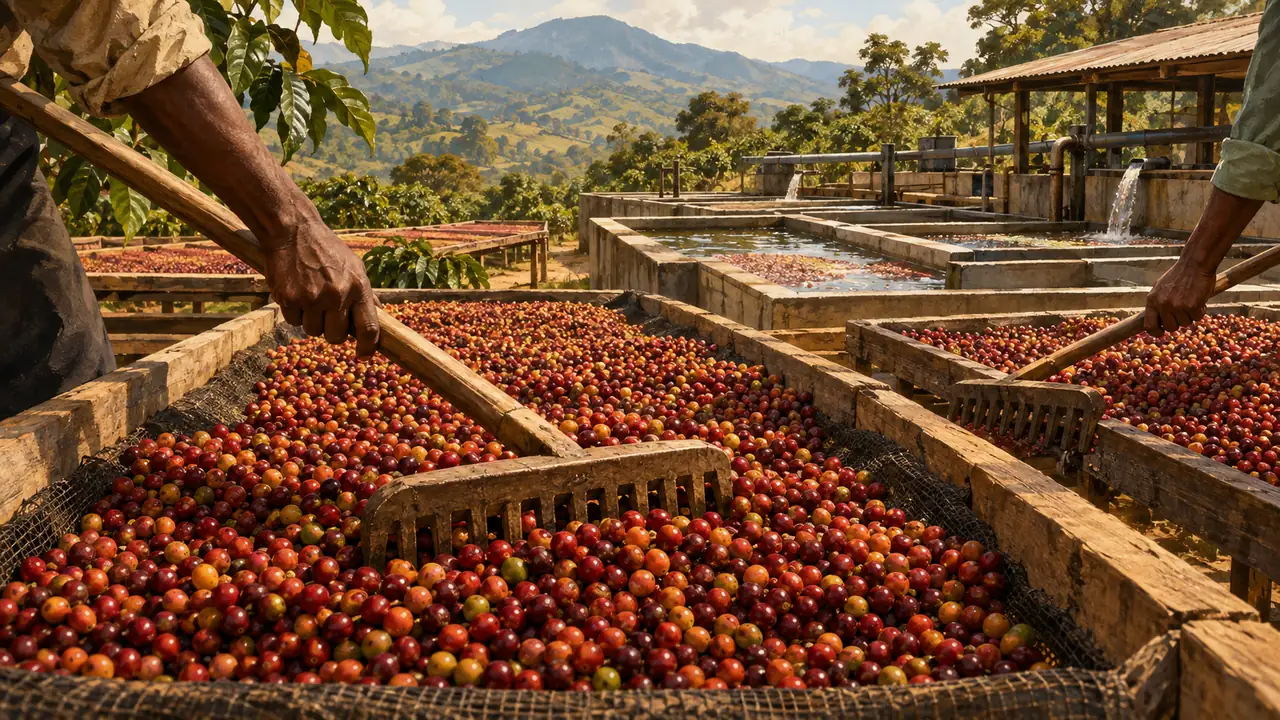
Header image: illustration generated for the site, with editorial value, not a photographic document. The other visuals on the page carry their own credit in the caption.
Dictionary terms (in French)
References
Claims point to the numbered references below, with their access date. Sections marked "to be documented" have no verified source yet and assert nothing. Some sources are secondary: their nature is stated in their title.
- FAO, Arabica coffee manual for Lao PDR: processing (ae939e) · accessed 20 November 2026
- Daily Coffee News (2017), « Honey process: get to know this sweetheart of specialty coffee » · accessed 20 November 2026
- Barista Magazine, "Hello, Honey": the Costa Rican honey process · accessed 20 November 2026
Editorial revision: . Dates and data limits remain those given in their sources. Translated from the French chapter.