Roasting
Roasting turns a green bean into aromatic coffee. It follows recognisable thermal stages, including the cracks.
The essentials in three points
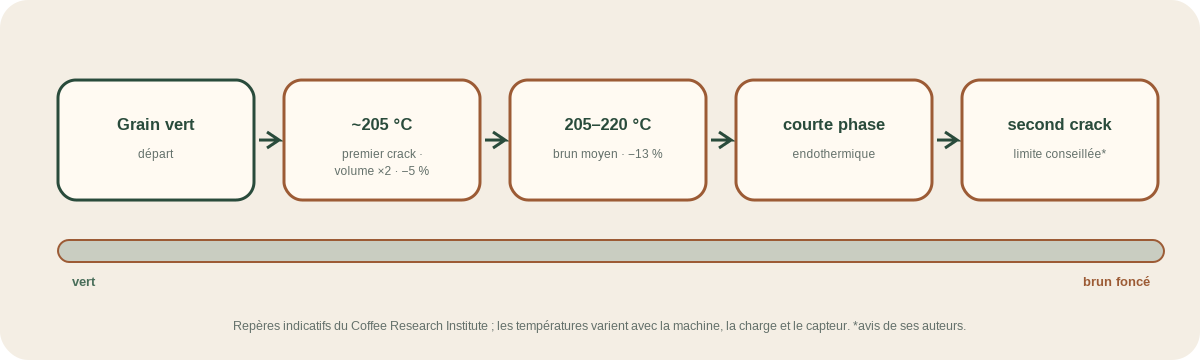
- According to the Coffee Research Institute, which cites Davids' book: first crack around 205 °C, volume doubled, loss of about 5 % of mass. These are indicative reference points, not constants [1].
- Same source: from 205 to about 220 °C, medium brown colour and a loss of about 13 % [1].
- The second crack follows a short endothermic phase [1].
Go deeper
Tap a heading to open or close the section.
First crack
Beyond the first crack
From 205 °C to about 220 °C, the colour goes from light brown to medium brown and the mass loss reaches about 13 %; a short endothermic phase precedes the second crack [1]. The same page recommends, as its authors' opinion, not roasting well beyond the start of the second crack; this is a matter of taste, not a rule [1]. Temperatures vary with the machine, the load and the sensor.
Chemistry: Maillard and caramelisation

Resting and degassing
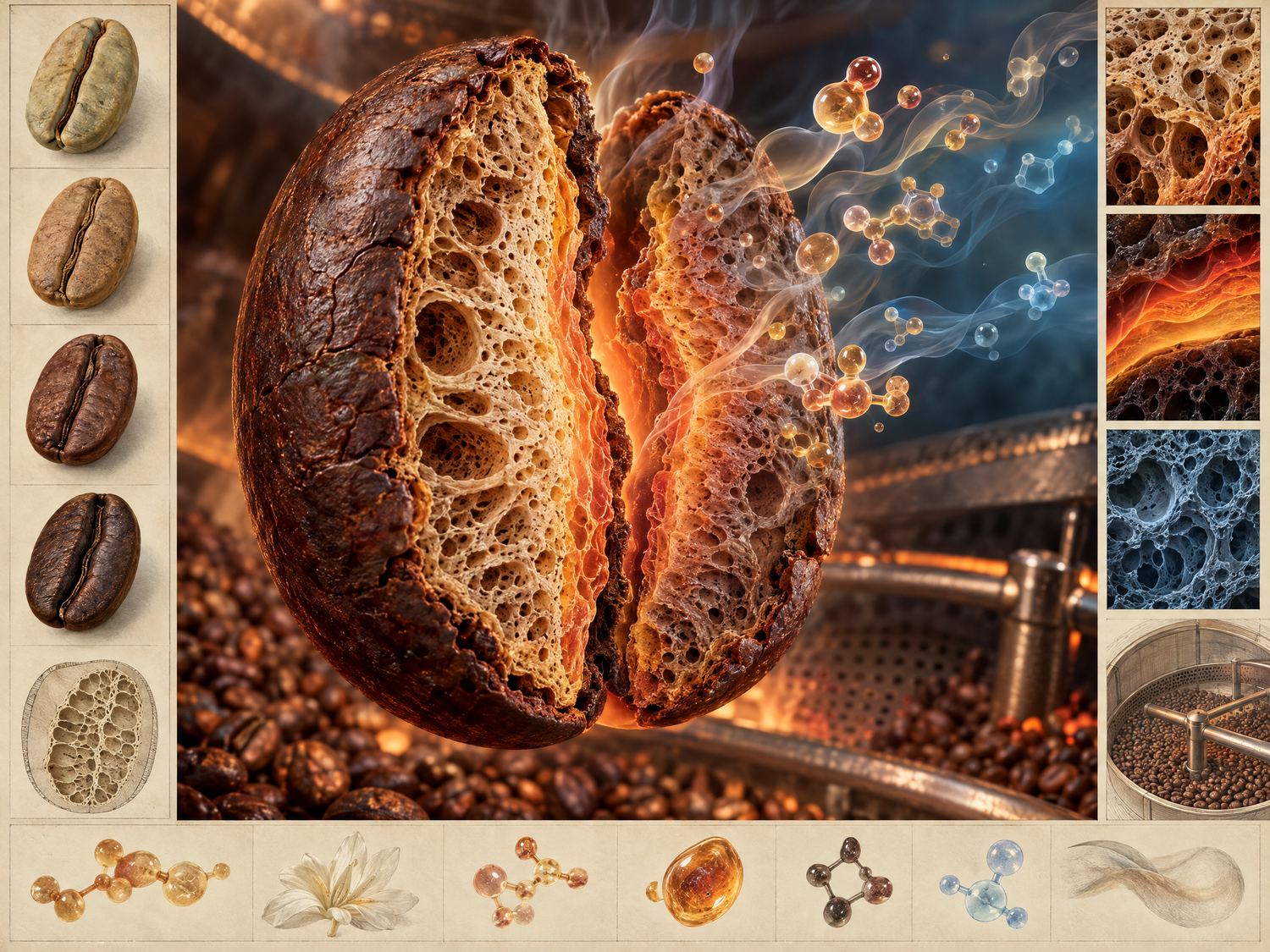
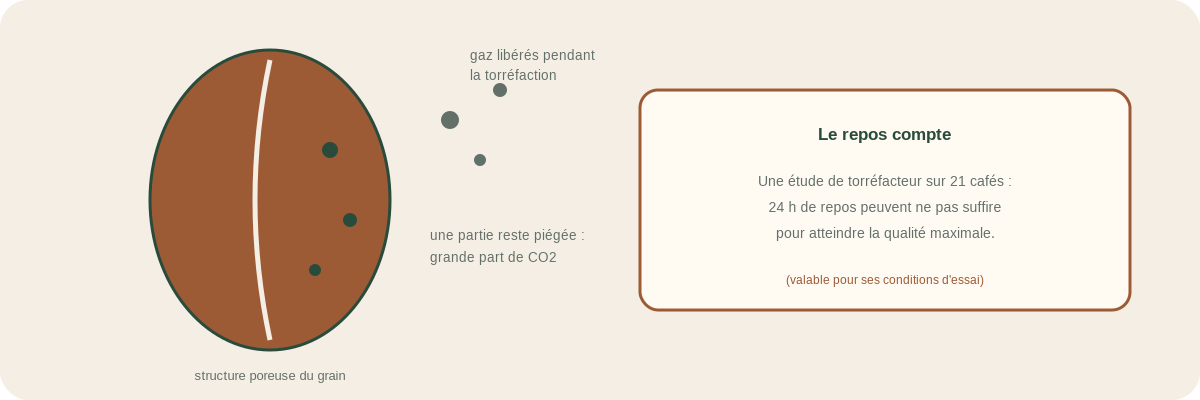
Roasting forms gases, a large share of them carbon dioxide; some are released during roasting, some stay trapped in the porous structure of the bean [3]. A roaster's study of 21 coffees indicates that a 24-hour rest may not be enough to reach maximum quality; it only applies to its test conditions [4].
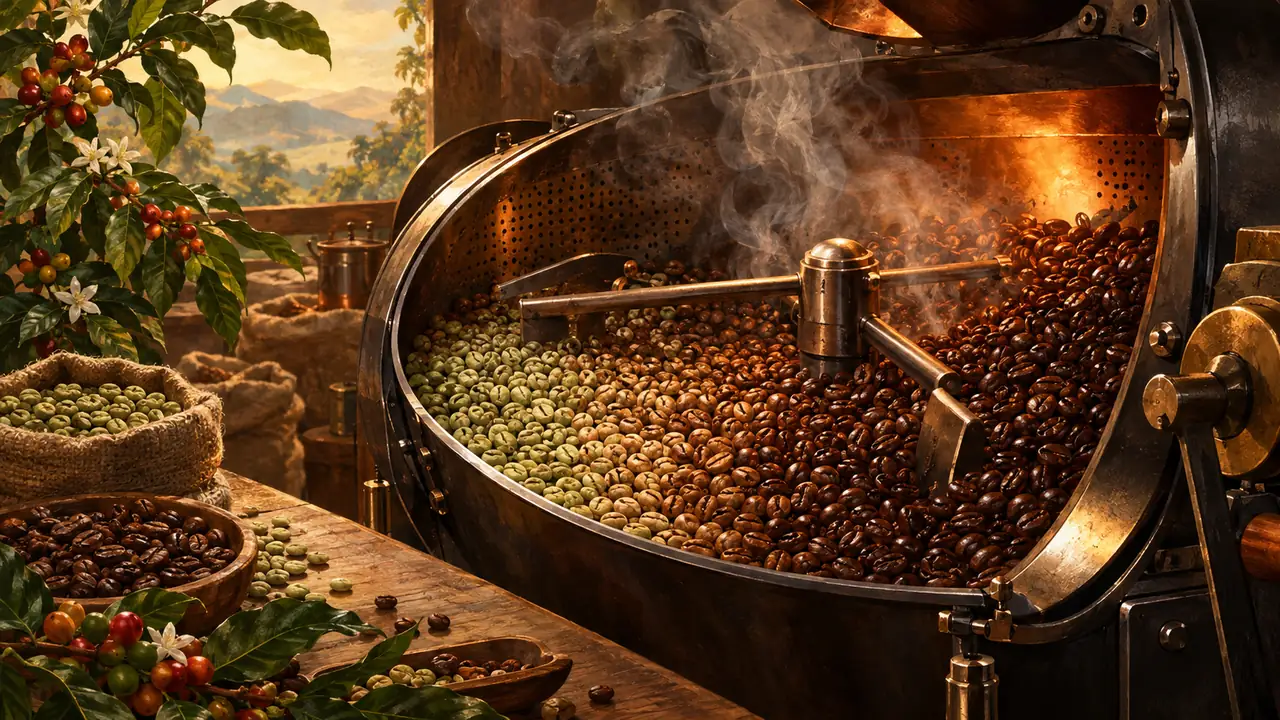
Header image: illustration generated for the site, with editorial value, not a photographic document. The other visuals on the page carry their own credit in the caption.
Dictionary terms (in French)
References
Claims point to the numbered references below, with their access date. Sections marked "to be documented" have no verified source yet and assert nothing. Some sources are secondary: their nature is stated in their title.
- Coffee Research: roasting (Coffee Research Institute) · accessed 20 November 2026
- Coffeester, roasting chemistry (Maillard, caramelisation) · accessed 20 November 2026
- Journal of Agricultural and Food Chemistry 66(21), « Time-resolved gravimetric method to assess degassing of roasted coffee » · accessed 20 November 2026
- Café Kreyol, post-roast rest study on 21 coffees (a roaster's study) · accessed 20 November 2026
Editorial revision: . Dates and data limits remain those given in their sources. Translated from the French chapter.