Botany and diversity
Coffee is a seed of the Rubiaceae family. Two species make up most of the trade: Arabica and Canephora (robusta). Wild diversity, for its part, is fragile.
The essentials in three points
Go deeper
Tap a heading to open or close the section.
Arabica: a recent hybrid
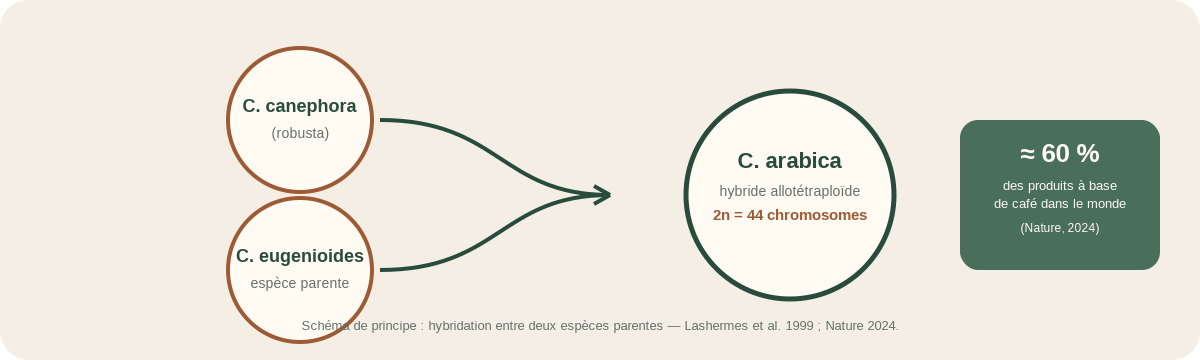
Coffea arabica is an allotetraploid (2n = 44) resulting from the hybridisation of C. canephora and C. eugenioides [3]. It is the source of about 60 % of coffee-based products worldwide; its cultivated lines have gone through several genetic bottlenecks [4].

Canephora (robusta) and Arabica: differences between the plants
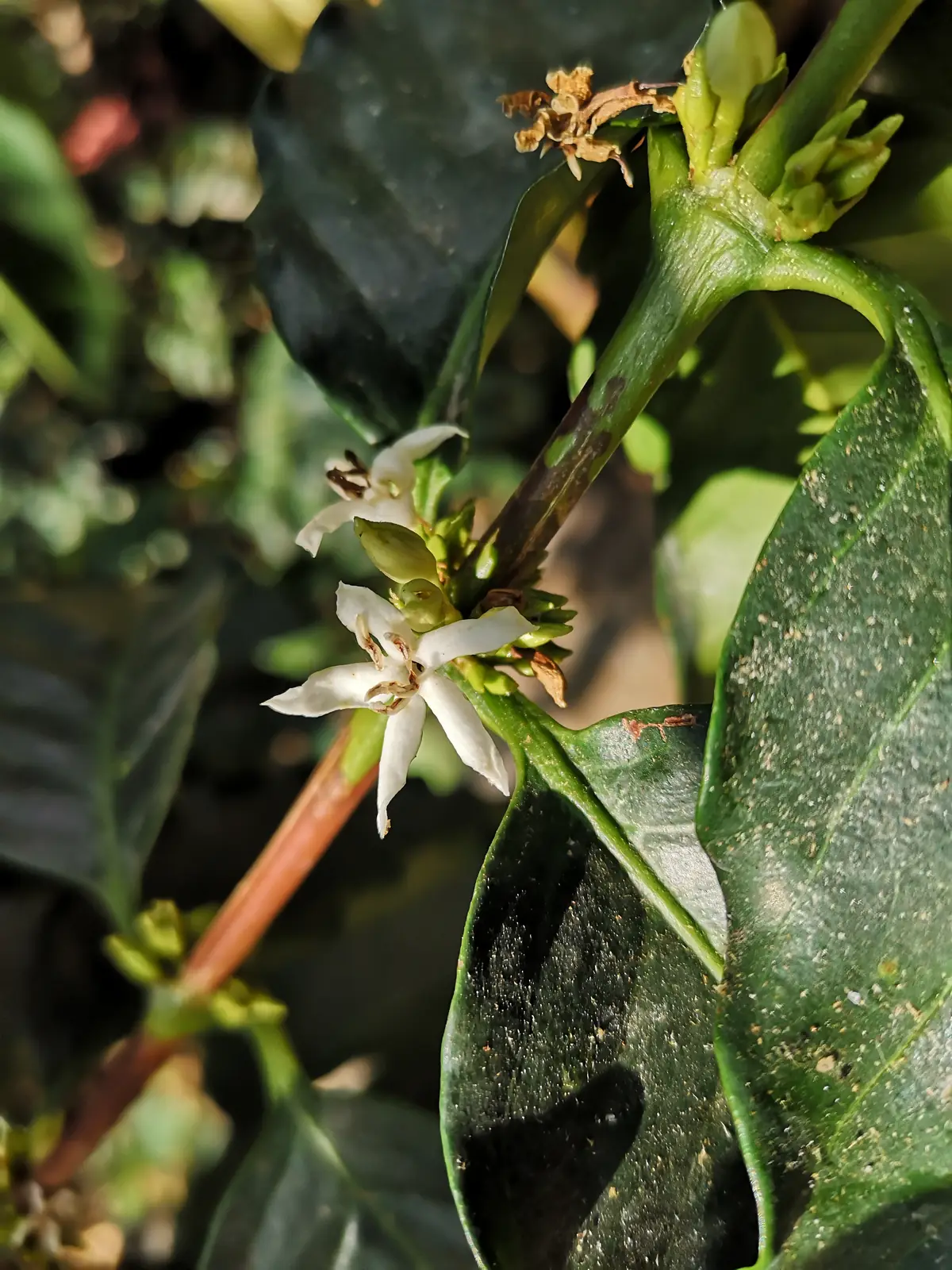
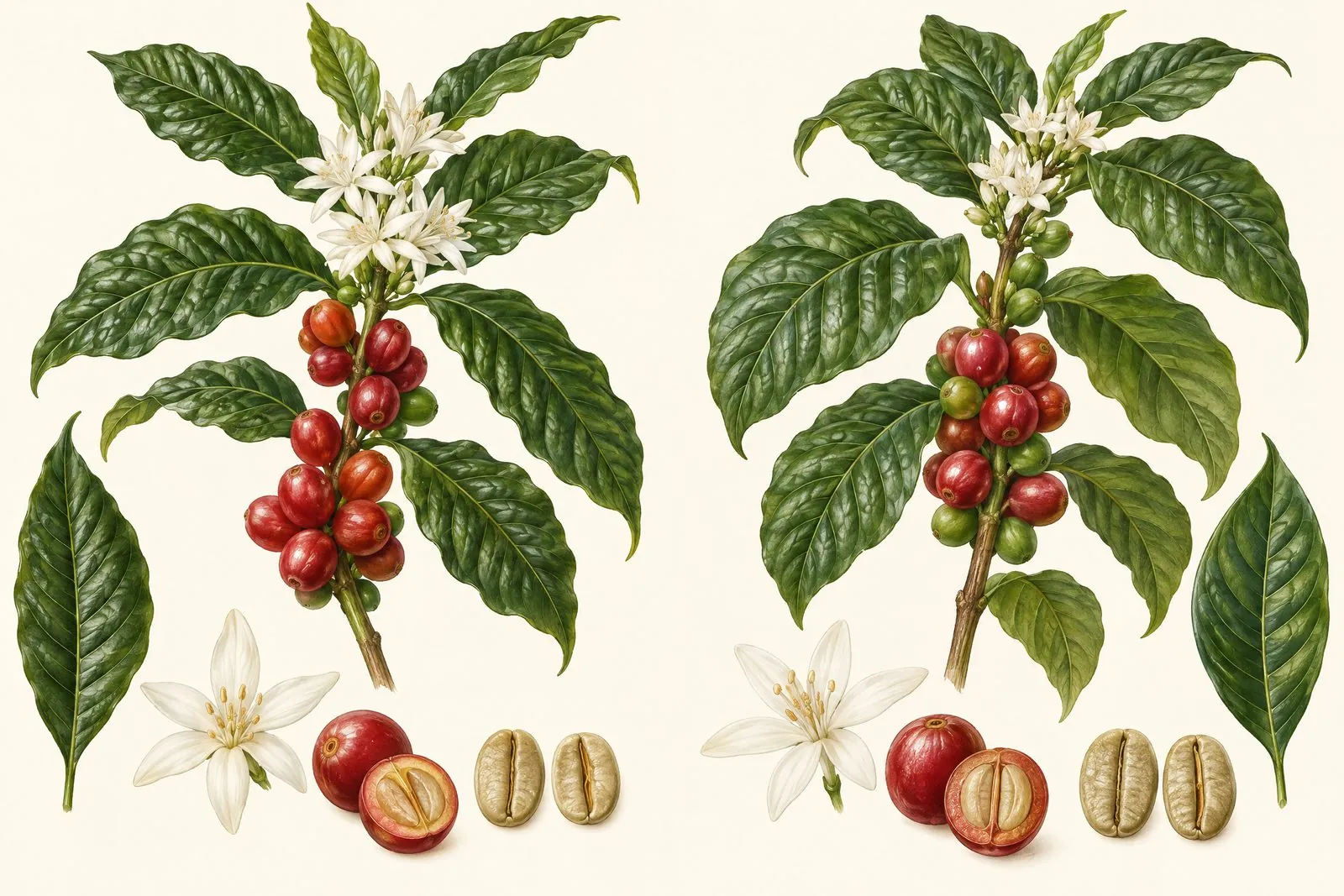
According to the FAO, Arabica is self-pollinating (it can pollinate itself), whereas robusta is cross-pollinating; robusta leaves are much larger [5].
A rich genus, threatened species
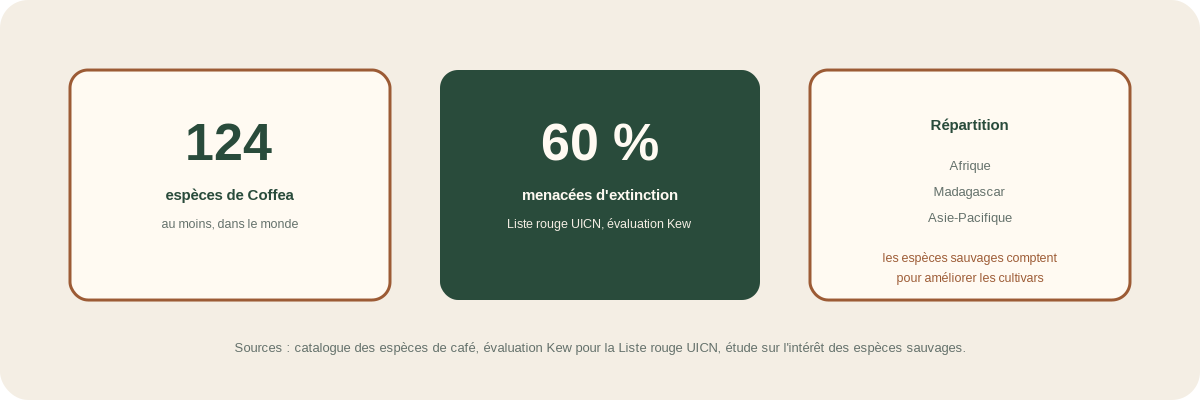
The genus Coffea includes at least 124 species spread across Africa, Madagascar and the Asia-Pacific region [1]. The IUCN Red List assessment, carried out by Kew on these 124 species, concludes that 60 % are threatened with extinction [2] [6]. Wild species matter for improving cultivated varieties [6].
Varieties and resistance
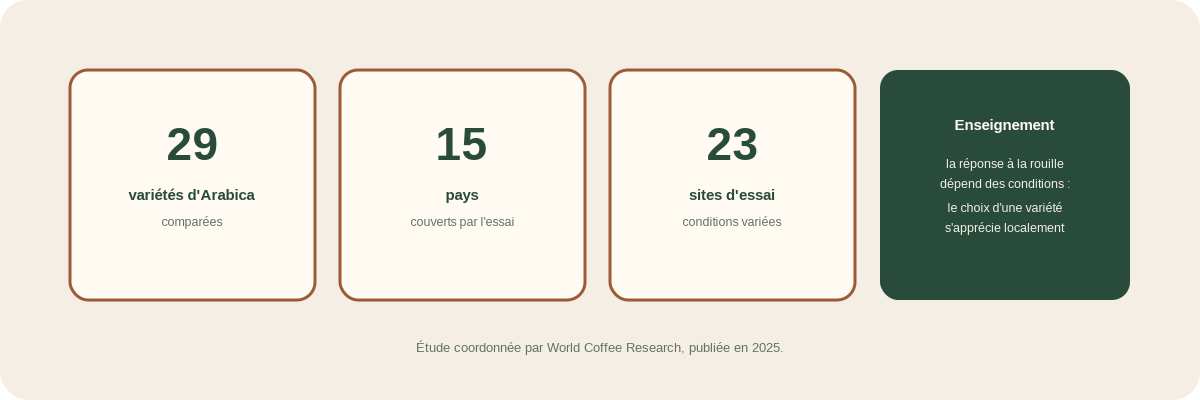
A study coordinated by World Coffee Research compared in 2025 the response of 29 Arabica varieties to leaf rust in 15 countries and at 23 sites [7]. According to this study, varieties respond differently to the disease depending on conditions; the choice of a variety should therefore be assessed locally (this site's reading, not a conclusion of the study).
Leaf rust and berry borer
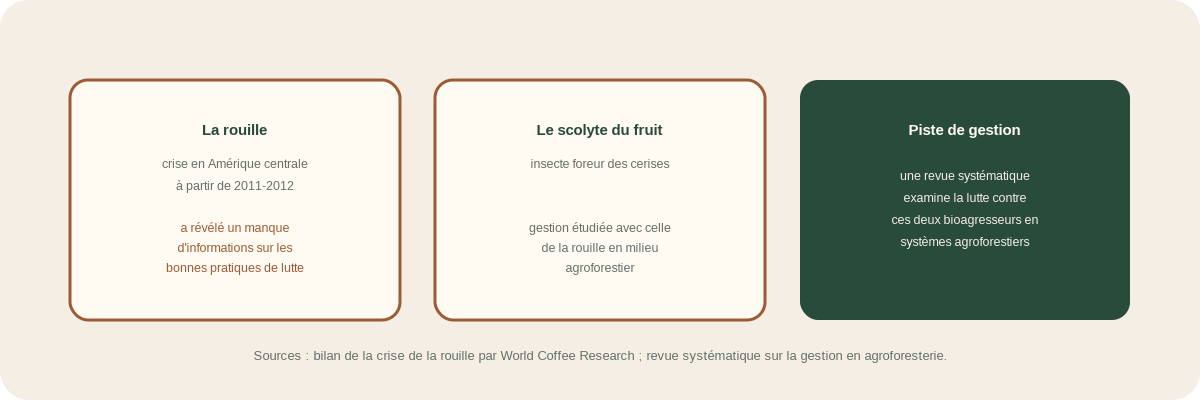
The leaf rust crisis in Central America, starting in 2011-2012, revealed a lack of information on good control practices [8]. A systematic review examines the management of leaf rust and the coffee berry borer in agroforestry systems [9].
Anatomy of the cherry
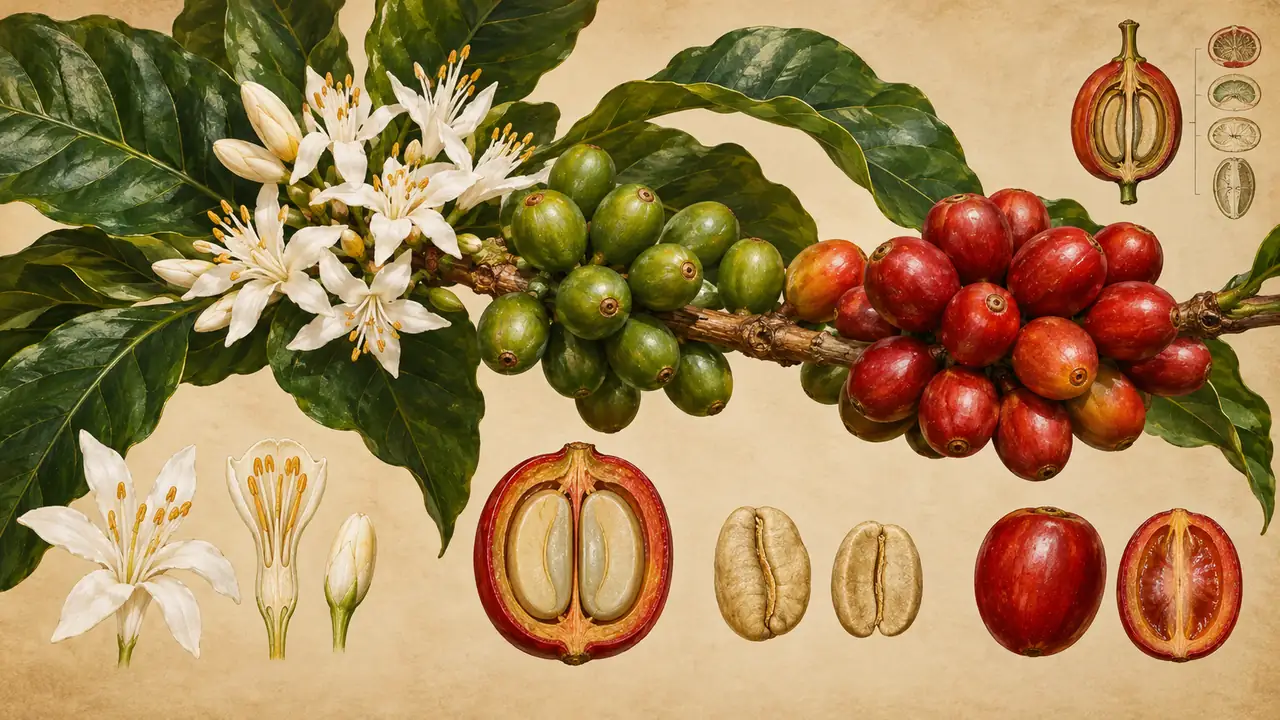
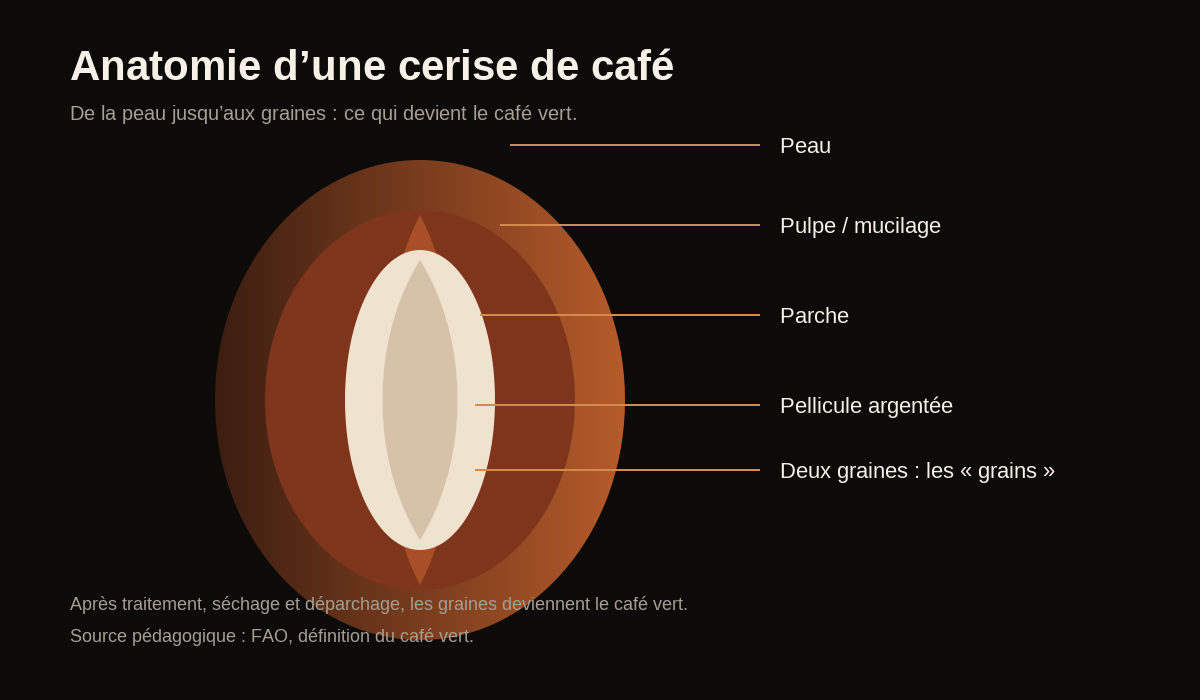
The fruit of the coffee tree is a drupe: a fleshy fruit whose wall differentiates into exocarp, mesocarp and endocarp around the seed [10]. A cherry generally contains two seeds, surrounded by skin, pulp, mucilage, parchment and silverskin [11] [12].
Header image: illustration generated for the site, with editorial value, not a photographic document. The other visuals on the page carry their own credit in the caption.
Dictionary terms (in French)
References
Claims point to the numbered references below, with their access date. Sections marked "to be documented" have no verified source yet and assert nothing. Some sources are secondary: their nature is stated in their title.
- USDA ARS, Coffee Crop Germplasm Vulnerability Statement (2020) · accessed 20 November 2026
- Royal Botanic Gardens, Kew (2019), 60 % of wild coffee species threatened · accessed 20 November 2026
- Lashermes et al., « Molecular characterisation and origin of the Coffea arabica L. genome » (1999) · accessed 20 November 2026
- Nature Genetics (2024), « The genome and population genomics of allopolyploid Coffea arabica » · accessed 20 November 2026
- FAO, Coffee: introduction and ecology (X6939E) · accessed 20 November 2026
- Science Advances (2019), « High extinction risk for wild coffee species » · accessed 20 November 2026
- World Coffee Research (2025), multi-country study of 29 Arabica varieties against leaf rust · accessed 20 November 2026
- World Coffee Research, Prevention and Control of Coffee Leaf Rust · accessed 20 November 2026
- Systematic review: leaf rust and berry borer in agroforestry (Smart Agricultural Technology, 2024) · accessed 20 November 2026
- Royal Society of Chemistry, « Introduction to Coffee Plant and Genetics » (Coffee: Production, Quality and Chemistry) · accessed 20 November 2026
- Coffearium, anatomy of the coffee cherry (secondary summary) · accessed 20 November 2026
- ECHO, « A Primer on Coffee Harvesting and Processing » · accessed 20 November 2026
Editorial revision: . Dates and data limits remain those given in their sources. Translated from the French chapter.