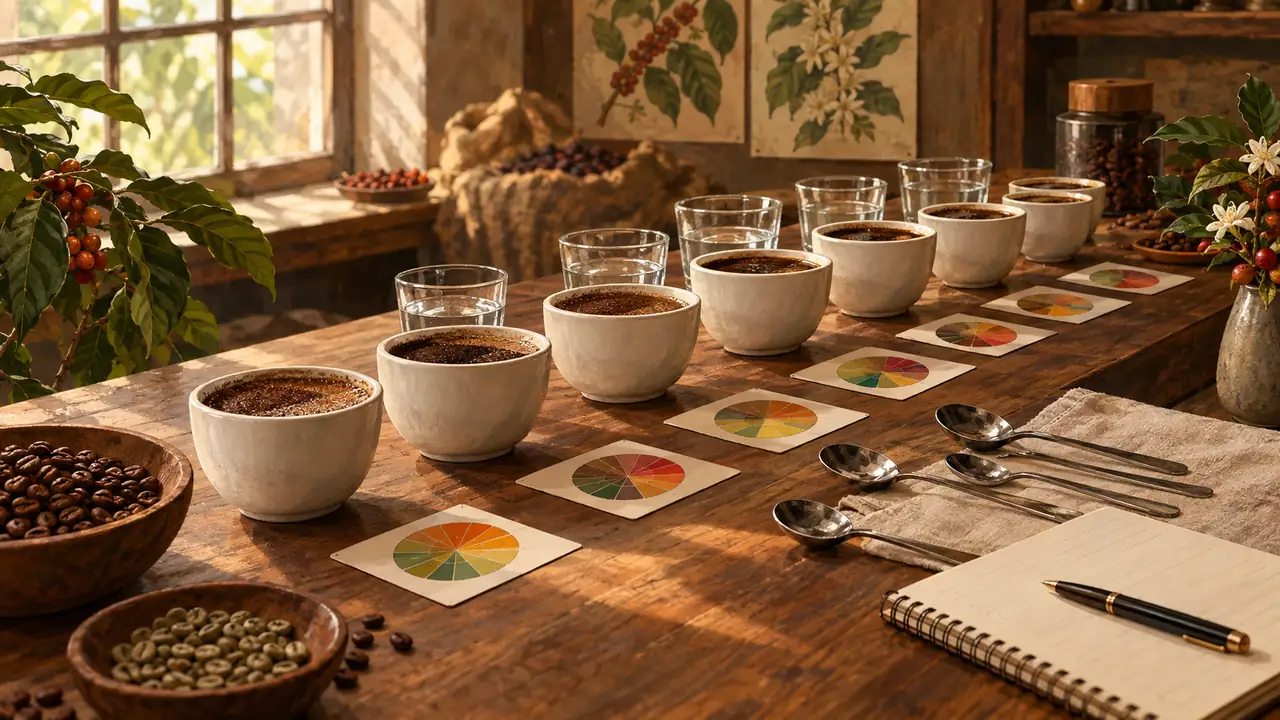
Tasting and sensory analysis
Tasting means learning to name things. The SCA has published tasting standards that separate objective description from personal appreciation.
The essentials in three points
- The SCA adopted three components of the "Coffee Value Assessment" as cupping standards: SCA-102, SCA-103 and SCA-104 [1].
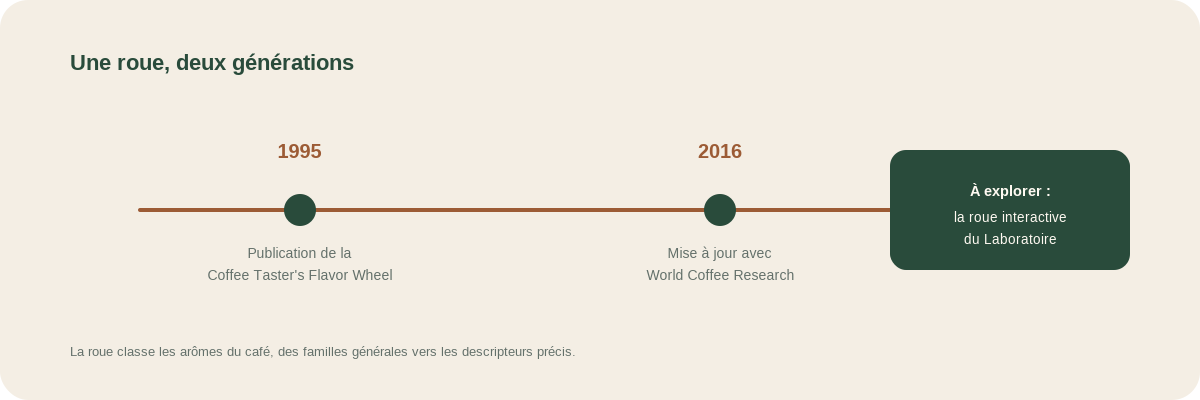
- The Coffee Taster's Flavor Wheel dates from 1995 and was updated in 2016 with World Coffee Research [2].
- Descriptive evaluation: aroma, flavour, texture and aftertaste, with standardised language [1].
Go deeper
Tap a heading to open or close the section.
The SCA cupping standards
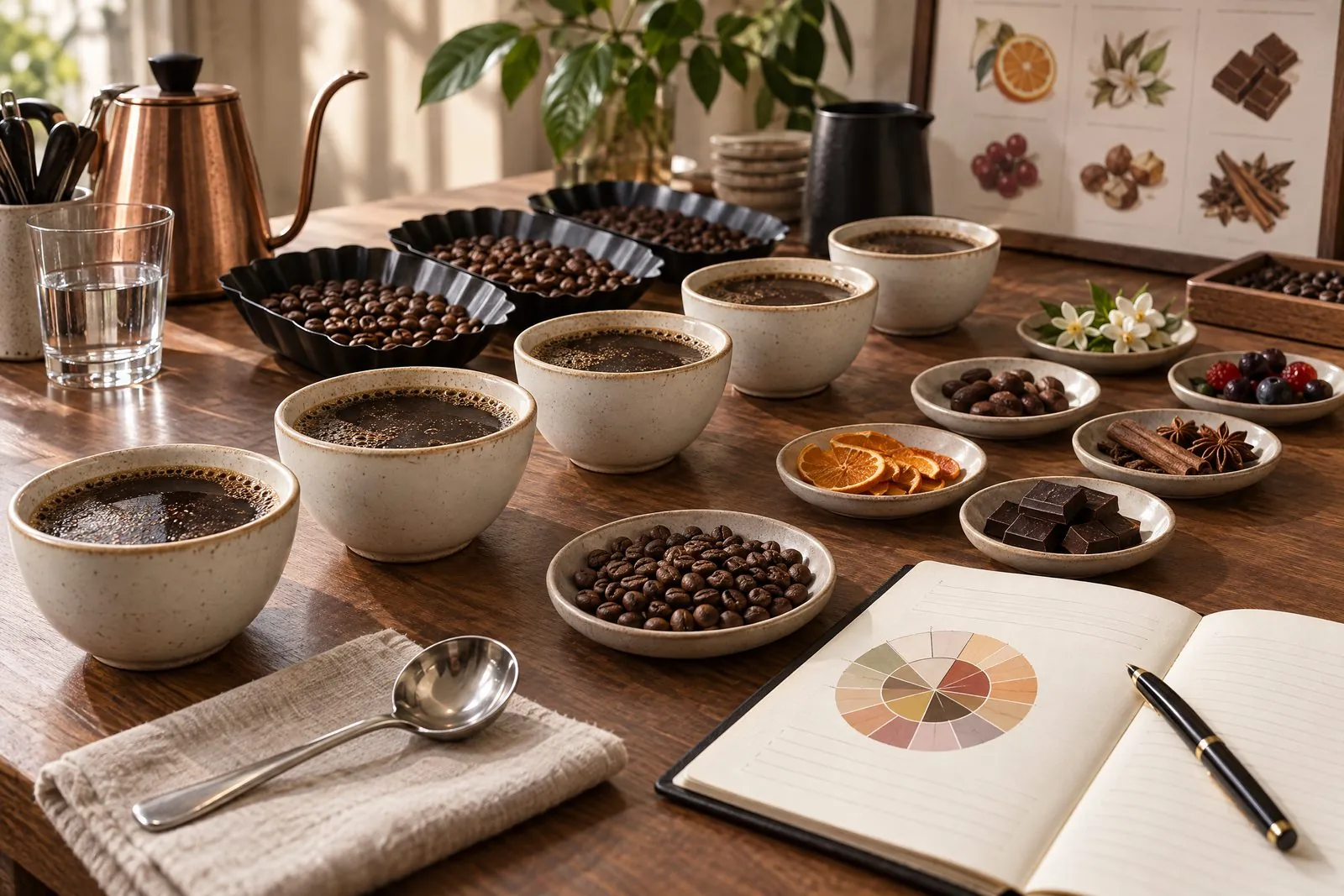
The flavour wheel
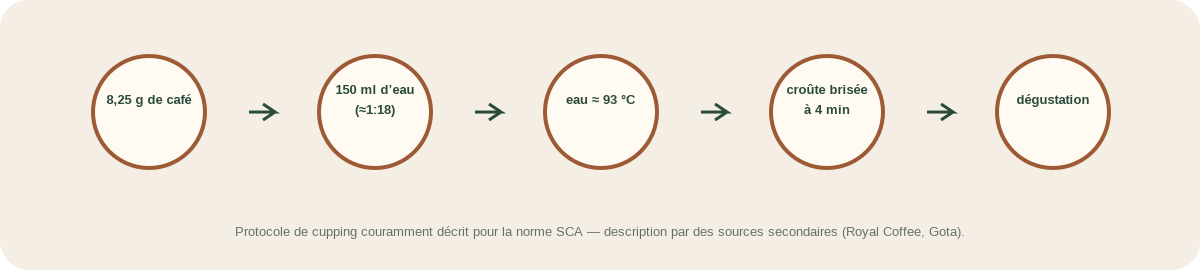
Cupping in practice
Green coffee defects
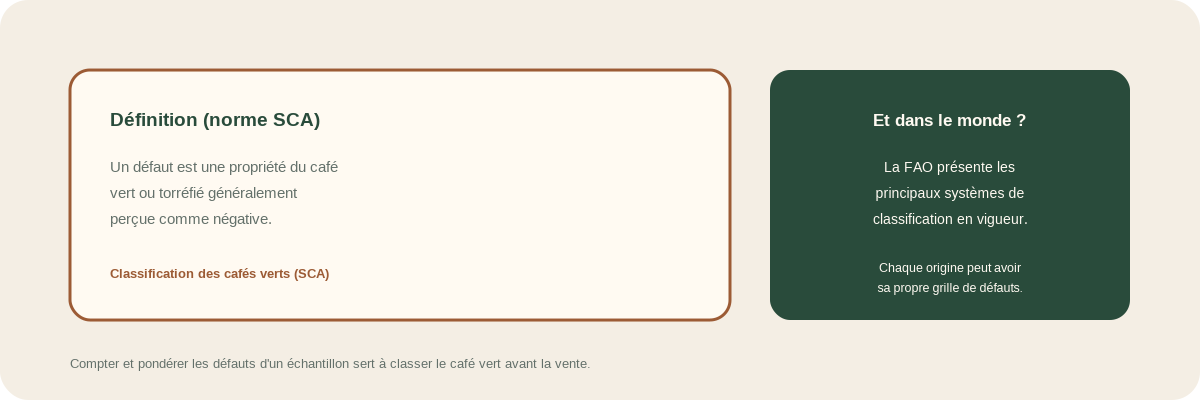
The SCA green coffee classification standard defines a defect as a property of green or roasted coffee generally perceived as negative [5]. The FAO presents the main classification systems [6].
Header image: illustration generated for the site, with editorial value, not a photographic document. The other visuals on the page carry their own credit in the caption.
Dictionary terms (in French)
References
Claims point to the numbered references below, with their access date. Sections marked "to be documented" have no verified source yet and assert nothing. Some sources are secondary: their nature is stated in their title.
- SCA, adoption of the SCA-102, 103 and 104 cupping standards (CVA) · accessed 20 November 2026
- SCA, Coffee Taster’s Flavor Wheel (1995, updated 2016 with World Coffee Research) · accessed 20 November 2026
- Royal Coffee, « How to set up and run a coffee cupping » (describes the SCA protocol) · accessed 20 November 2026
- Gota, « The SCA protocol » (describes the SCA cupping protocol) · accessed 20 November 2026
- SCA (2025), « Grounding green grading in sensory science » (green coffee classification, definition of defects) · accessed 20 November 2026
- FAO, Annex 7 : Green coffee classification and grading · accessed 20 November 2026
Editorial revision: . Dates and data limits remain those given in their sources. Translated from the French chapter.